Friendly Steps Co-op Rope Guide
One rope, four destinies, and a pull button you will forget until someone screams.
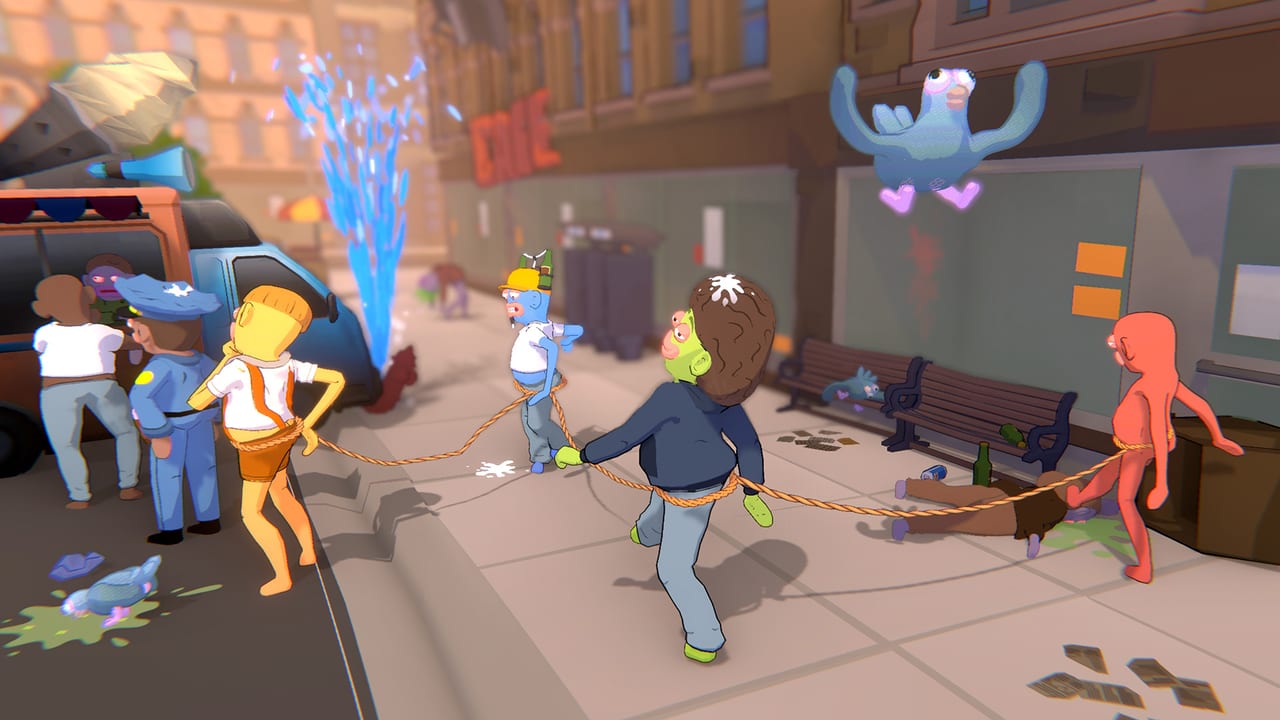
Friendly Steps is built for a squad. Steam lists 1–4 players with solo, local co-op, LAN co-op, and online co-op, plus online voice chat. The rope is not a cosmetic. It is a physics constraint that turns one bad tap into a group highlight. This page is how to host, how to assign roles, and how to pull people back onto the street. Read How to walk first if your own legs still betray you.
Hosting a lobby
Pick a host with the most stable connection and a PC that meets the system requirements. Broadband is listed even for local-looking chaos because online sessions still sync ragdolls. One player can also use Remote Play Together if the store listing in your region includes it and only one person owns the build.
Start with two players. Three is the sweet spot for comedy without constant pile-ups. Four is the Steam pitch and the hardest consensus. If a new friend is joining, run a flat street before any Construction crane.
Turn voice chat on. Text chat cannot call a freeze in time. If voice is miserable, use a Discord call from the links hub and mute the in-game layer so you do not hear double audio.
Rope roles that actually help
Name the roles out loud before you leave the bar:
- Lead. Walks first, calls “left, right,” and never takes a shortcut without a vote. Put your calmest tapper here, not your loudest friend.
- Middle. Damps the rope. Best seat for a controller user because analog steps soak panic from both ends.
- Anchor. Watches slack, looks backward on stairs, and hits pull when someone hangs. This is the job people skip and then blame the lead.
- Scout (four-stack only). Looks for bottles, cops, and glowing alleys, but does not walk toward them unless the lead agrees. Scouts who wander are how you meet the pavement.
Swap the lead after a wipe. Fatigue makes taps bigger. A fresh lead with tiny steps is worth more than a hero who “knows the way.”
Kaif’s playtest squad stated a fact that changes four-stacks: the rope only connects you to the person next to you in line. The lead cannot yank player four by walking harder. If player two is on the floor, player one comes back down instead of stretching that adjacent link into a zip-line. Order on the rope is a strategy, not a seating chart. Put the calm tapper first and the patient puller last. The The Trip briefing uses the same adjacency rule when the floor looks melted.
The pull button
KYRSP33DY’s lobby found the save: look at the dangling teammate and press E. If you pull while looking at the sky, nothing useful happens. If you walk forward instead of pulling, you join the pendulum. Freeze, look, pull, then wait for them to plant a foot before anyone else taps.
On a broken bridge, the correct picture is ugly and slow: one player planted, one player hanging, one player pulling, zero players sprinting. The hero screenshot on Getting Started is this situation. Treat it as a puzzle, not a race.
If two people hang, pull the lighter ragdoll first so the remaining mass is easier to drag. If the whole squad is off a crane, you are in Construction logic — expect a checkpoint retry rather than a miracle stand. Details sit on the Construction page.
Collisions, cops, and other people
City streets in the press kit show other pedestrians, a water burst, a cop, and a flying pest while the rope still has to thread the sidewalk. Do not fight NPCs. Steer around them with shorter steps. The rope will clip a bench if the lead cuts a corner. Middles should announce “bench left” the way a rally co-driver calls a hairpin.
Online desync shows up as rubber-band slack. If one player is jittering, pause on flat ground. Continuing through jitter is how you get four different truths about who is standing.
Local versus online habits
Local or LAN is the teaching environment. You can point at a foot. Online is the party environment. The same roles apply, but callouts must be shorter: “freeze,” “pull blue,” “tiny steps,” “crawl.” Long speeches happen during ragdolls and they delay the crawl.
Solo players can still use this page. Practice the pull on any AI slack the build gives you, and treat furniture as teammates that refuse to tap. Then invite a human for the real joke.
Party rules that keep friendships
- Nobody drinks a bottle without a count. See items.
- Nobody takes a shortcut the tier list marks as suicide.
- Nobody rage-quits mid-hang. Pull first, lecture later.
- Record the run if you want clips. Playing for the clip is how you skip the plant beat.
When the rope feels like a team instead of a punishment, open the walkthrough and try to finish a night. Speedrun mode is the endgame version of the same agreement: smaller taps, fewer beers, same pull button.
KYRSP33DY’s hour-long session in the middle of this page is useful because the lobby talks through the mapping in real time, including the E-to-pull discovery, while the rope does what the rope always does.
Frequently Asked Questions
Quick answers to the most common Friendly Steps questions.
How many players can join one rope?
Up to four, plus a working solo mode. Steam lists local, LAN, and online co-op. Start with two if anyone is new.
How do I save someone hanging off a ledge?
Stop walking, look at them, and use the pull input (E on PC in public sessions). Then wait for a planted foot before the line moves.
Is voice chat required?
It is not required, but the game ships with online voice chat because the rope needs freeze and pull callouts. Discord from the links page works too.
Should the best gamer lead?
No. The calmest tiny-step walker should lead. Aiming skill helps more on the controls page than in the front of the rope.